
September 29, 2026 • By Jeff Gaudette
Subscriptioned to Death: When Did We Stop Owning Things?
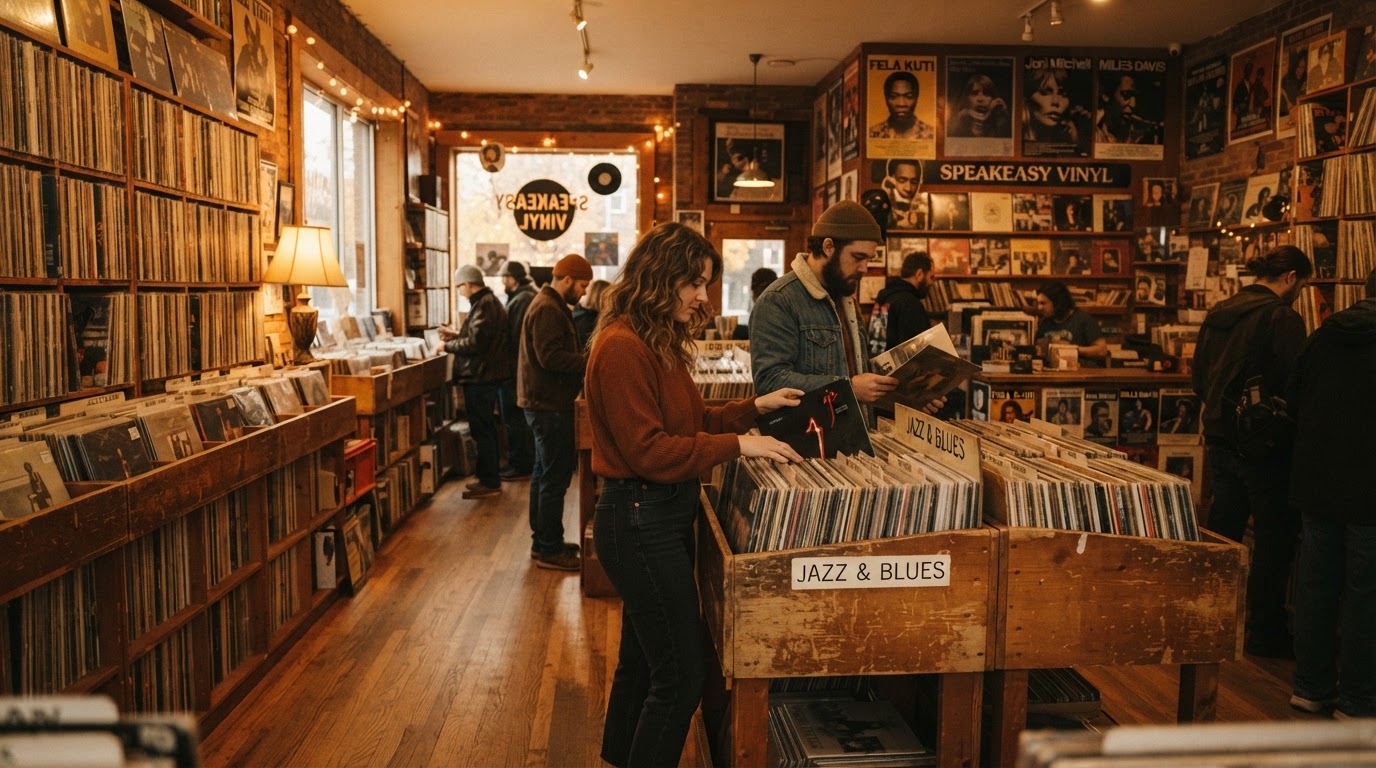
We traded ownership for convenience, endless access for meaningful experiences, and somehow ended up paying more to own less.
Remember when Friday afternoons meant something?
Maybe you were heading to Strawberries, Tower Records or your favorite local music store to pick up the latest album from a band you’d been waiting months to hear.
Depending on your generation, that meant flipping through vinyl records, cassette tapes or CDs. You’d spend time browsing the aisles, checking out album artwork, reading the track listings and maybe discovering something entirely unexpected.
And when you finally made your purchase, you couldn’t wait to get home, tear off the plastic and listen to the entire album.
There was something special about that experience.
You didn’t just have access to the music. You owned it.
You could play it a thousand times. You could lend it to a friend. You could bring it to a party. Twenty years later, you could stumble across that same album in a box in your basement, and suddenly you were right back in the moment when you first bought it.
The same was true of movies.
Remember standing in the video store on a Friday night, trying to decide which movies were coming home with you for the weekend? Or the excitement of adding a favorite movie to your DVD collection?
And if a friend mentioned a movie they hadn’t seen, you’d say, “I’ve got that one! I’ll bring it over.”
They’d return it the following week, probably with another movie they thought you’d enjoy.
It was simple. It was personal.
And somewhere along the way, we traded almost all of it away.
The Greatest Trade We Never Really Thought About
To be fair, what replaced those experiences initially seemed like an incredible deal.
Instead of purchasing individual albums, we could pay a small monthly fee and have access to practically every song ever recorded.
Instead of building shelves to accommodate our growing DVD collections, we could stream thousands of movies and television shows directly into our living rooms.
No more scratched CDs. No more late fees. No more driving across town only to discover that the movie you wanted was already rented.
Everything was available at the touch of a button.
And for a while, it really did feel like progress.
But something interesting happened.
The music collections we once owned became libraries we rented. The movies we purchased became titles we could watch only as long as a streaming service maintained the rights to them.
Our favorite shows started bouncing between platforms.
And the monthly subscriptions began multiplying.
A few dollars here. Another $15 there. A premium membership for this. An upgraded subscription for that.
Music. Movies. Television. Software. Cloud storage. Fitness programs. Even features in some of the products we purchase.
We’re increasingly surrounded by things we pay to use but never actually own.
And the moment we stop paying, much of it disappears.
Somewhere along the way, convenience became a recurring bill.
Connected to Everything. Connected to Nobody.
But I think there’s something we’ve lost that’s even more important than ownership.
We’ve lost some of the human connection that came along with it.
Think about the conversations that used to happen inside a record store.
You’d run into somebody you knew. You’d ask the person behind the counter what they were listening to. Someone might recommend a band you’d never heard of.
You could spend an entire afternoon flipping through albums, discovering music and talking to complete strangers who shared your interests.
Music wasn’t just something you consumed.
It was something that brought people together.
The same was true of movies.
Your DVD collection was practically an invitation for conversation. Friends would browse your shelves, comment on your questionable taste in movies and borrow something for the weekend.
You’d exchange recommendations, argue over which movie was better and introduce each other to things you might never have discovered on your own.
Today, an algorithm handles much of that for us.
It knows what we listen to, what we watch and what we’re most likely to enjoy next.
And while that’s incredibly convenient, it doesn’t quite replace a friend handing you an album and saying, “Trust me. You need to hear this.”
We’ve never had greater access to entertainment, information or each other.
Yet sometimes it feels like we’re more disconnected than ever.
We’ve become connected to everything, but somehow less connected to one another.
The Hidden Cost of Convenience
Of course, I’m not suggesting we throw away our smartphones, cancel every subscription and return to the days of rewinding VHS tapes.
There are tremendous benefits to the technology we enjoy today.
But I do think it’s worth asking whether we’ve become so focused on convenience that we’ve stopped considering what we’re giving up in exchange.
Ownership used to mean something.
When you purchased something, it became yours. You could use it, maintain it, share it, sell it or pass it along to someone else.
Today, we’re increasingly comfortable paying indefinitely for temporary access.
And that mindset extends well beyond entertainment.
Think about how many aspects of our lives now operate on recurring payments. Services that were once individual purchases have become ongoing financial commitments.
Individually, many of these subscriptions seem insignificant.
Collectively, however, they can represent a meaningful portion of our monthly expenses.
And unlike a physical item you purchase and own, the financial obligation continues for as long as you want access.
It’s worth considering how much we’re spending each month simply to maintain access to the lifestyle we’ve created.
What Does Ownership Mean for Our Financial Future?
This is where I believe the conversation becomes particularly relevant to retirement.
During our working years, it’s easy to overlook relatively small recurring expenses. We have regular income coming in, and another $10 or $20 monthly subscription doesn’t necessarily seem like a big deal.
But retirement changes that equation.
When we transition from earning a paycheck to relying on the income generated by our retirement savings, Social Security and other resources, understanding our ongoing financial obligations becomes increasingly important.
Consider the difference between owning something outright and committing to an expense that continues indefinitely.
Neither approach is inherently right or wrong. Sometimes subscriptions offer tremendous value, and sometimes ownership makes more financial sense.
The important thing is recognizing the distinction.
As we prepare for retirement, we should be asking ourselves whether the assets we’ve accumulated will provide the financial flexibility and independence we’re hoping to achieve.
Are we building lasting financial security, or are we simply accumulating more monthly obligations?
Are we making conscious decisions about what we own and what we rent?
And perhaps most importantly, are we preserving the ability to make those choices for ourselves?
At Reservepoint Financial, these are the types of conversations we believe are worth having.
Retirement planning isn’t simply about accumulating the largest possible account balance. It’s about creating a strategy that supports the lifestyle you want, helps protect what you’ve worked to build and provides the flexibility to enjoy the next chapter of your life.
Maybe It’s Time to Bring Back a Little Ownership
Recently, I’ve found myself thinking about how exciting it used to be to buy a new album.
Not because I couldn’t wait to add another possession to my collection, but because of everything that came with the experience.
The anticipation. The discovery. The conversations. The memories.
That album wasn’t just a collection of songs. It became part of the soundtrack of my life.
And I can’t help wondering whether we’ve sacrificed some of those experiences in our pursuit of unlimited access to everything.
Maybe the answer isn’t to abandon modern conveniences.
Maybe it’s simply to become a little more intentional about what we choose to own, what we’re willing to rent and where we invest our time and money.
Support a local record store. Buy a physical copy of an album you love. Invite a friend over to watch a movie instead of sending them another streaming recommendation.
And while you’re at it, take a closer look at the financial commitments you’ve accumulated along the way.
Because there’s something to be said for owning the things that matter.
Whether we’re talking about our favorite album, our home, our financial future or simply our time, ownership gives us something that unlimited access never quite can.
A sense that what we’ve worked for is actually ours.
And maybe that’s something worth holding on to.
Reservepoint Financial helps individuals and families navigate retirement income planning, wealth preservation and estate planning. If you’re approaching retirement and would like to explore strategies designed around your financial goals, contact us to schedule a complimentary conversation.